
Signs and Symptoms Of Chlamydia In Men and Women

Last updated on July 28th, 2018 at 05:14 am
What are the signs and symptoms of chlamydia in men and women?
Chlamydia infection affects millions of women and men all over the world. About 141 million people are affected worldwide. It is caused by Chlamydia trachomatis. Not all women and men with chlamydia infection will show symptoms of the disease. People without symptoms of the disease can develop complications.
Chlamydia is a sexually transmitted infection. People that indulge in unprotected intercourse are likely to have chlamydia infection. However, chlamydia is more common in women than men and between the age of 15 and 25 years.
In the united states more than 1.4 million people were affected in 2014. Also in 2013, more than 1000 deaths were due to chlamydia infection.
Chlamydia can coexist with other sexually transmitted infections (gonorrhea, trichomoniasis). About 20 percent of men will have gonorrhea and chlamydia infections at the same time. This is quite high for women. About 40 percent of women with chlamydia will have gonorrhea infection.
In addition, chlamydia symptoms include vaginal discharge and low abdomen pain in women. While its possible not to develop symptoms for the disease, you can have complications of the infection if not treated. Some which include damage to the Fallopian tube, infertility, and pelvic inflammatory disease (PID). It is therefore important to see your doctor to prevent these complications.
In this article, we will explain the cause, symptoms, and treatment of chlamydia.
What is chlamydia and what causes it?
Chlamydia is a sexually transmitted infection (STIs) that affect about 10 percent of women under 24 years old. It is contacted by vaginal, anal and oral intercourse. It caused by Chlamydia trachomatis.
Women that practice unsafe sexual intercourse are more likely have the disease. Sexual contact is the commonest mode of transmission. However, it could be transmitted during childbirth and women with poor hygiene.
It is often recommended that women who are sexually active conduct yearly testing for the disease. This is more important for women that are pregnant. This is because in pregnancy chlamydia can cause miscarriage, preterm babies, and ectopic pregnancy.
What are the signs and symptoms of chlamydia?
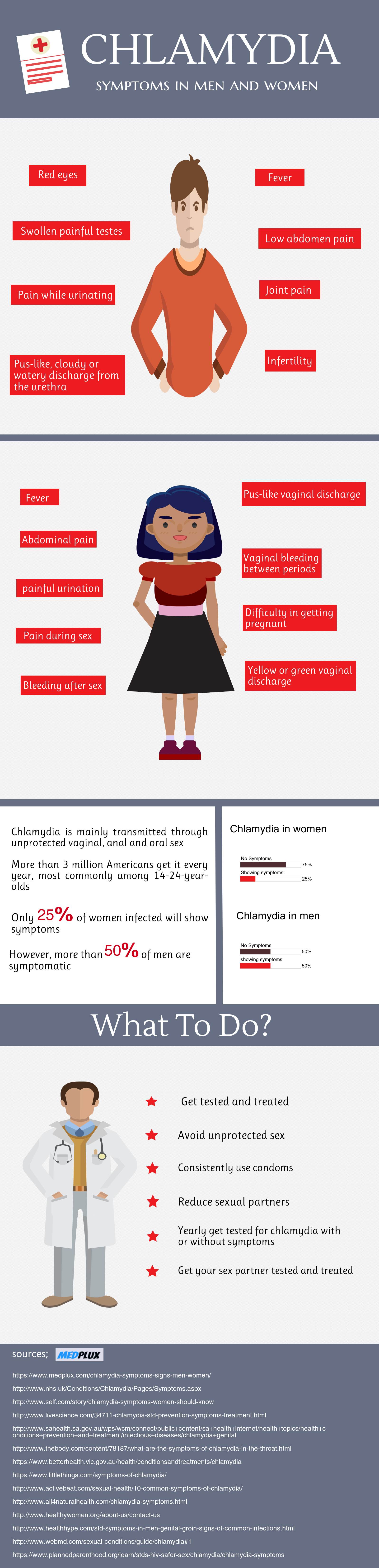
Not all women and men will show symptoms of the disease. About 70 percent of women and 50 percent of men will not show symptoms of chlamydia. Therefore, if you have had unprotected sexual intercourse then it’s important to get tested. Early diagnosis and treatment are important in infected women to prevent complications.
Chlamydia symptoms in women
- No symptoms in 70 percent of infected women
- Abdominal pain
- Vaginal discharge of pus like fluid
- Vaginal bleeding between periods
- Fever (High body temperature)
- Burning sensation will unrinating or painful urination
- Pain after intercourse
- Difficulty in getting pregnant
- Ectopic pregnancy. This is due to damage of the fallopian tube due to ascending chlamydia infections
- Pelvic inflammatory disease
- In pregnancy, it can cause preterm delivery, miscarriages and death to the baby
- Bleeding after intercourse
- Blindness
Chlamydia symptoms in men
- No symptoms in about 50 percent of men with the infection
- Pus like discharge from the urethra
- Pain while urinating (Dysuria)
- Swollen painful testes
- Infertility
- Blindness
- Prostatitis due to inflammation of the prostate gland
- Anterior urethritis due to inflammation of the urethra
READ MORE: Chlamydia symptoms in men
How is chlamydia diagnosed?
You should see your doctor if you experience any of the above symptoms. During your clinic visits, some test will be carried out.
Urine sample are not reliable in women. Cervix swab and urethral swabs are used for testing. Some chlamydia tests include
- Polymerase chain reaction
- Culture of specimen. This test has a can detect the infection but it is expensive.
- Nucleic Acid Amplification Tests (NAAT).
In addition, you should inform your partner to get tested and treated. Reinfection can occur if you have sexual intercourse with an infected partner again. Also, contact tracing should be done. This is to inform people you’ve had unprotected intercourse with to get tested as well.
How is chlamydia infection treated?
If you were diagnosed with the infection then you will need treatment. The good news is that chlamydia can be treated and cured. The drugs used are doxycycline, azithromycin, amoxicilin. In pregnant women with the infection, amoxicillin and azithromycin are safe.
Doxycycline is given twice daily for a week. However, it has some side effects which include vomiting, nausea, mild passage of watery stool and skin rash. If you experience any problems while taking your medications, you should inform your doctor.
In addition, you should complete your medications and take them. Also, where possible, your doctor will prescribe drugs for your partner. It is important to talk to him or her on need for treatment.
What are the complications of chlamydia infection?
Because chlamydia does not show symptoms in everyone that is infected, it can easily cause long term problems in both men and women. If treatment does not occur early some of this complications are possible.
- Pelvic inflammatory disease (PID). This is an ascending infection that affects the fallopian tubes, ovaries, uterus and abdomen. It can cause severe pain and infertility in women.
- Peri-hepatitis. This is due to inflammation of the covering of the liver.
- In children, chlamydia can cause red eyes and pneumonia.
- If the fallopian tubes are affected, the baby may grow outside the uterus. This will cause severe pain or fainting attack if it ruptures
- Infertility or inability to conceive
- Increased chance of contacting other sexually transmitted infections like HIV, Gonorrhea, Trichomoniasis.
- Epididymitis
How to prevent chlamydia infection?
- Avoid sexual intercourse. This include vaginal, oral and anal intercourse. Since chlamydia is transmitted mainly via sexual intercourse, abstinence is the best preventive methods.
- Use condom.
- Reduce your sexual partners. If you are serious about preventing chlamydia infection, you must reduce your sexual partners and live a healthy life.
- Ensure you get your partner screened and treated
- Get your new partner tested and treated.
- Retest for chlamydia infection after 5 weeks to ensure it has cleared
- Contact all sexual partners and encourage to go for test. This will help prevent the spread of the infection.
Frequently Asked Questions
You asked and we answered your questions on chlamydia.
How do you get chlamydia?
Men and women contact chlamydia infection by sexual contact. It can happen via oral or anal contact.
What is chlamydia discharge?
Women infected with chlamydia may experience yellow and white discharge. However, it is important to see your doctor because it can chlamydia can mimic other STD symptoms.
Read More: Chlamydia discharge in men and women
What is the chlamydia bacteria that cause the infection?
The organism that causes the infection is chlamydia trachomatis.
