
Why Is My Period So Light This Month? 10 Reasons For Light Period

Last updated on July 28th, 2018 at 04:45 am
Are you worried why period is very light this month? Do you feel signs of pregnancy or afraid you may have a medical problem? Early very light period could be a sign of pregnancy, peri-menopause or minor effects of unstable hormones.
This article will explain the causes of less bleeding during periods and when to worry.
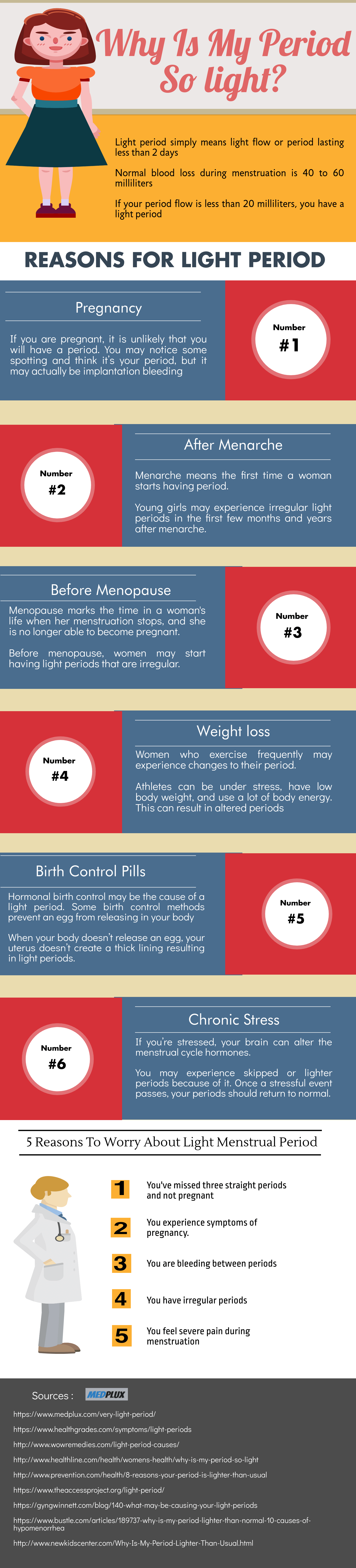
What is a normal period and when is a period light?
If you just started menstruating for the first time, you may be worried about how long period last. Period normally last between 2 – 7 days and most women start menstruating by the age of 16.
Period lasting more than seven days is prolonged while period lasting less than two days is short.
How much blood is lost in each period?
Normal blood loss during period is between 40 to 60mls in most women. If your period blood loss is more than 80mls, your period is abnormally heavy.
However, if your period blood loss is less than 20mls, then you have a very light period. A light period may mean there is a medical problem, pregnancy or unstable hormones.
Why is my period so light this month?
If you had a light period and worried, these are the common causes
1. Pregnancy
This is a common cause of very light period in women. Spotting before period may be confused as lighter than normal period. This spotting is due to implantation bleeding.
What is implantation bleeding and when does it occur?
After intercourse during your fertile window, fertilization may occur. Fertilization is the union of the man’s sperm and the woman’s ovum. After fertilization, the zygote or fertilized egg is implanted into the lining covering the uterus (endometrium). During this process called implantation, slight bleeding that occurs in some women may be confused as a very light period.
How long does implantation bleeding last? Implantation bleeding usually last for a few hour to a maximum of 3 days, and it is usually a brownish or pinkish discharge before period.
What should I do if my very light period is due to pregnancy?
If you notice a very light period that is earlier than normal, it may be due to implantation bleeding. However, there are many other reasons for early period.
If due to pregnancy, you should wait for a while and get a home pregnancy test. If you check for pregnancy days after light spotting, it may be negative due to low HCG levels. Best time to confirm pregnancy is a week after your period is late.
2. After your first period or years before menopause
If you are less than 20 years or more than 40 years, then its possible you may have very light periods sometimes.
In young girls, periods after menarche (first period) are usually lighter than normal or may be irregular.
As you grow older, sometimes lasting up to 6 years from your first menstruation, your body hormones will normalize. So, if you are worried about your very light period after your first period (menarche), then you shouldn’t.
Women more than 40 years and close to menopause may experience irregular period that is shorter than normal or lighter than normal. This is not a problem as it’s normal for period to get irregular and lighter as you get closer to menopause.
During menopause, your period stops. If you’ve stopped having period for 12 consecutive months and notice light bleeding from your vagina, then it’s abnormal. You should inform your doctor as bleeding after menopause is a bad sign.
3. Weight loss or obesity
If you are obese, it’s possible you may have a very light period or irregular period.
Excessive exercise and severe weight loss can affect hormones that control your menstrual cycle.
4. You are on birth control pills
If you are on a birth control pill or missed a pill, then it’s possible you may have very light bleeding or spotting in between periods. Birth control pills work to prevent your ovulation. If you do not ovulate, then you cannot get pregnant.
Ovulation is the release of an egg from the ovaries. If ovulation does not occur, the covering of your womb (endometrium) will be thin. This can come out like a light period in women.
What should I do?
If you have a light period after missing your pills for days, it may be due to hormonal changes or pregnancy.
Do you feel pregnancy signs like nausea, body weakness or increased urination?
Also, if you have just started taking a pill, then it’s okay if you experience some light spotting. This resolves in few months time as you body adjusts to these pills.
Excessive bleeding with blood clots while on pills are abnormal. You should talk to your doctor ASAP.
5. You have Eating Disorders
Eating very little food (Anorexia nervosa) or eating too much food without control (Bulimia nervosa) can affect your period.
Eating problems can affect the hypothalamus pulse release of hormones that stimulate the pituitary gland and ovaries to secrete estrogen and progesterone. For normal period to occur, there is an interplay between estrogen and progesterone hormones.
Eating disorder in women may cause early menstruation, no period or very light period.
6. Polycystic ovarian syndrome (PCOS)
Women with polycystic ovaries may sometimes have an irregular light period or heavy period.
What is PCOS? This is a common cause of infertility among women of childbearing age and occurs due to hormone imbalance.
Symptoms of PCOS are
- Excessive body hair distribution
- Feature of a cystic ovary on ultrasound
- Difficulty conceiving
- Weight gain or obesity
- Heavy or light periods
- Spotting after period
- Acne
What should I do if I have these symptoms and light periods?
You should inform your doctor and try to lose weight. Drugs like clomiphene, COC pills and metformin are used in women with PCOS to regulate period and improve fertility.
11 Reasons to worry about very light periods?
- You continue to have very light period years after menarche
- You are finding it difficult to get pregnant
- Your period is too frequent and lasting less than two days
- You notice your period every less than 21 days
- Your period is very irregular
- You feel vaginal itching or pain during intercourse (This may be an infection)
- Your period blood loss in less than 20mls (scanty period)
- You’ve had no period for three months
- Bleeding after menopause
- You feel a mass in your abdomen, or your tummy is getting bigger in size.
- You feel pregnant
Frequently asked questions about light period flow in women
These are some FAQs about light period flow that may concern you. Let us know if you have more questions below.
Light period, Am I Pregnant?
If you notice light period that is earlier than normal, then it may be due to pregnancy. Implantation spotting occurs ten days after you ovulate or 4 days to a week before your next period. It is lighter than your period and does not last more than three days.
Other causes of light periods are
- Trauma during intercourse
- Infections
- PCOS
- Excessive weight loss
- Young women after menarche
Why is my period lighter than normal this month
If you are just noticing a lighter than normal period this month then its possible due to pregnancy. Do you feel other pregnancy signs — nausea, getting tired easily and cramps?
Other reasons your period is lighter than normal are
- Stress
- weight loss
- Eating disorders
- Obesity
- Polycystic ovaries
- birth control pills
Is light period brown blood pregnancy? Is it unusual?
Yes and No. Unusually light period brown blood may be due to pregnancy. Implantation blood is a light or brown discharge that comes out from your vagina some days before your period. You should wait for some time to get a pregnancy test done.
Other causes of light period brown blood are
- Vaginal infection
- Birth control pill
- Ovarian cyst
Read more: Why is my period blood black or dark?
What causes Light period negative pregnancy test?
Light period with negative pregnancy test may be due to other non-pregnancy reasons or pregnancy too. If your light period is due to implantation, pregnancy test done on the day of implantation will be negative and inaccurate. If your pregnancy test is negative and you have light spotting, then you should wait for a week and recheck again.
Still negative, then it may be due to
- Birth control pills
- vaginal infections
- Stress
- Eating disorders
- Uterine fibroid
- Excessive exercise and weight loss
- Polycystic ovaries
Now it’s your turn. Do you have lighter than usual period? Is this the first time? Are you worried it could be pregnancy? Let us know below.

FAVOUR JOYBELL
I have light period for three months now which is unusual
Ivaienna
I am 46 years old. My last period was Aug20, I missed my period last September, then I had a light period last Monday that lasted until yesterday (2days). Is it a possility of pregnancy or menopausal?
thanks and more power
Dr. Dunn A.
If you are more than 30 – 40 years, its signs of menopause coming.
Claire o brien
I came off the pill sep had period 14th Oct and was due my next period 11th Nov but instead I had what looked like implantation bleeding on the 9th Nov for a day and a half
I have done numerous pregnancy tests and all came back neg. I feel exhausted bloated and have acne and cold sores I feel run down and have fullness I’m my breasts. I had tender breasts and nipples with cramps leading up too and at time of bleed . I’m considering going to doctor. I’m usually very regular 28 days and healthy . Any advice please??
Joy
I have lighter period or spotting lately is it bec of hormones imbalance or stress? Should i be worried about it?