
Ovary Pain Early Pregnancy (Right or Left): Causes, Signs, Treatment
Last updated on July 27th, 2018 at 12:59 am
Question: What causes Dull or sharp ovary pain early pregnancy on the right or left side of the abdomen?
During pregnancy, women experience changes to their pre-pregnancy body. Symptoms of pregnancy – food cravings, weight gain, fatigue, breast pain are difficult to deal with; And can make new-moms feel stressed out emotionally and physically.
Having an additional sharp or dull pain on one side of your belly could be even more troubling.
Some women quickly think of miscarriage each time they experience a dull or sharp pain on the right, left or lower part of their tummy.
The truth is women experience belly pain during pregnancy that is often described as dull aching pain or tiny cramps that usually disappear on their own.
You may now find that walking, running, turning, and sexual intercourse will sometimes cause pain in your abdomen and back.
Is it ovarian torsion or ovarian cyst?
If you are pregnant, your baby typically will grow within your womb. On each side of your uterus is the fallopian tubes that are about 10cm long and connect your uterus to your ovaries.
Before conception, your body will release an egg each month during ovulation. The process is controlled by hormones FSH (follicle stimulating hormone), LH (luteinizing hormone), progesterone and estrogen.
During ovulation, a mature follicle will burst open and causes the release of an egg that ends up being fertilized by the man’s sperm.
However, in women with an ovarian cyst, the follicles get filled with fluid, grow big and forms a cyst.
If the cyst is so large, it can cause ovary pain during pregnancy. A large ovarian cyst can burst open and cause pain, or disrupt blood circulation to your ovaries by forceful “twisting” with resultant sharp pain.
Though an ovary pain early pregnancy may indicate rupture of an ovarian cyst or ovarian torsion, there are other reasons you will feel pain in your abdomen.
An ectopic pregnancy, uterine fibroids, miscarriage, kidney stone, constipation, appendicitis, urinary tract infection and gallbladder infections may also result in a dull or sharp pain in your tummy during pregnancy.
This article explains the causes of ovary pain during early pregnancy, signs of an ovarian cyst during pregnancy, when you should worry and when to urgently see a doctor.
What causes ovary pain early pregnancy?
If you are experiencing pain on the right side or left side of your abdomen during pregnancy, here are possible reasons explained
1. Ovarian cyst rupture or torsion during pregnancy
If you currently experience pain in your belly while pregnant, it could be due to an ovarian cyst.
The truth is, ovarian cyst are common in pregnant women (about 1 in 1000 women); and commonly, women do not get any symptoms. A small cyst that forms early in pregnancy will disappear spontaneously, at most, during the second trimester.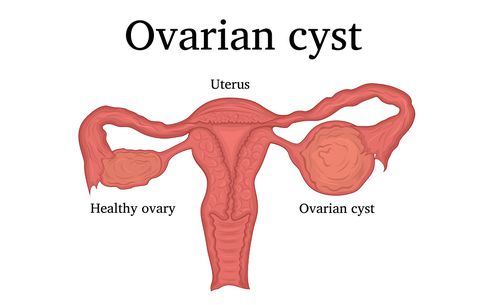
Usually, during routine abdomen ultrasound to check the status of your baby, your doctor may accidentally find a cyst. In most cases, these cyst goes unnoticed.
On the other hand, some women may get complications from a large ovary cyst that burst open or when it blocks blood supply to your ovaries (ovarian torsion).
Other symptoms of ovarian cyst (apart from a right or left side pain) are fever, nausea, vomiting, fatigue, dizziness, and abdominal swelling.
If the pain gets severe, and you now feel persistent fever, vomiting, sharp abdominal pain, you should talk to your doctor ASAP.
2. You have an ectopic pregnancy
Normally in the second week of pregnancy when egg and sperm fuse together at the fallopian tube, the embryo (your baby) is slowly moved back to the uterus where it starts growing after implantation.
However, during an ectopic pregnancy, the embryo fails to transported back to the uterus, and instead, develops at the fallopian tubes or in the abdomen.
If an embryo gets implanted at the fallopian tube, it means that, as it grows, the fallopian tube will expand till it ruptures leading to intraabdominal bleeding and severe right or left side abdominal pain.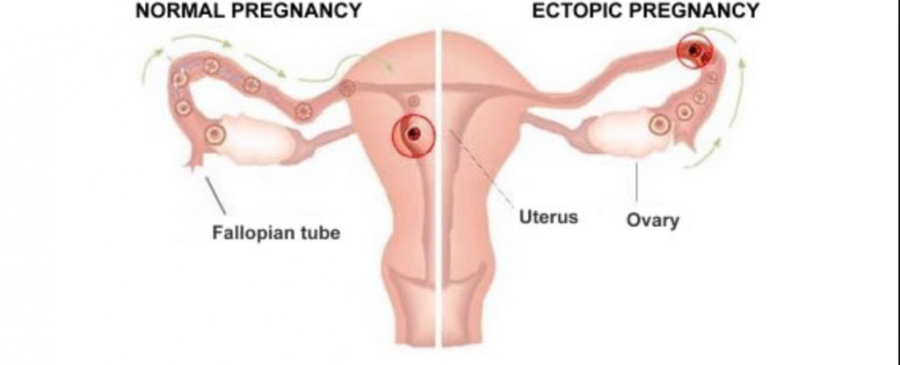
The truth is, if you’ve experienced back pain, vaginal bleeding, and a sharp right or left side belly pain, it could be due to an ectopic pregnancy.
Other symptoms are heavy bleeding, shoulder tip pain, dizziness, fainting, and extreme body weakness.
If you’ve been diagnosed with an ectopic pregnancy in the past, it’s possible that it may occur again. So don’t ignore a sharp pain, talk to your doctor ASAP.
Other risk factors are
- Failed tubal ligation
- Pelvic inflammatory disease with damage to the fallopian tubes
- Previous tubal surgery
What to do?
Talk to your doctor for help ASAP.
3. You are having a miscarriage
The common fear of expecting mothers, especially women who have had a miscarriage before, is losing their baby very early in pregnancy.
First of all, miscarriage rate during the first two months of pregnancy is very high.
Secondly, you may get cramps from time to time when pregnant. In most cases, it’s not something you should worry about.
Though more common in the 4th, 5th, 6th and 7th weeks of pregnancy, if you’re already in your second trimester, the chances of a miscarriage decreases significantly.
Symptoms of miscarriage in early pregnancy are vaginal bleeding, waist pain, and belly cramps. Cramps may be very severe as your uterus contract to expel the fetus
The common causes of miscarriage are a chromosomal disorder. Other causes are infections, uterus abnormalities, smoking, autoimmune diseases and first-trimester strenuous exercise.
Though symptoms of a miscarriage will vary from woman to woman, a heavy bleeding with visible fetal parts or blood clots is likely because of a miscarriage.
Talk to your doctor.
4. You probably have a pedunculated fibroid
Fibroids are benign growth that can occur in within or outside of the uterus. Sometimes, you may have fibroid even located within the uterine muscle (intramural fibroid).
The truth is if you have a fibroid, the most common symptoms are vaginal spotting between periods with prolonged periods that won’t stop.
Pain in your belly is not a common fibroid symptom. During pregnancy, smaller fibroids get bigger due to elevated pregnancy hormone (estrogen) and may affect your baby’s growth or cause discomfort during pregnancy.
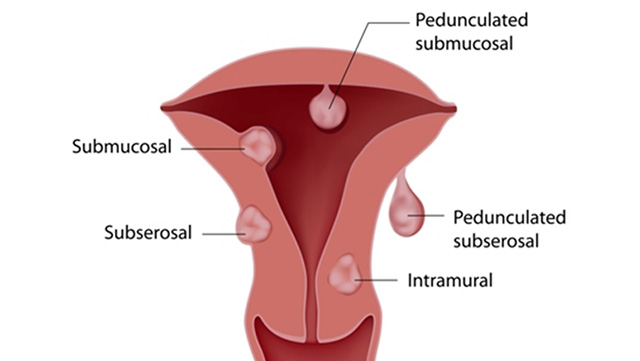 A pedunculated fibroid could cause pain during pregnancy. This type of fibroid is attached to the outer surface of the uterus and may cause pain.
Treatment options are bed rest and mild analgesic like acetaminophen. Make sure you talk to your healthcare provider before taking any medication in pregnancy.
Other causes of belly pain early pregnancy are
5. Constipation
6. Appendicitis
7. Urinary tract infection
8. Gallbladder stone
FREQUENTLY ASKED QUESTIONS
What causes dull ovary pain early pregnancy?
Usually, dull pain in early pregnancy is not uncommon. A lot of women that are pregnant will have mild belly cramps.
While it could be due to changes that take place in early pregnancy, if you have pain with spotting, it’s advisable to let your doctor know.
Nonetheless, if you are in your 3rd or 4th week of pregnancy, dull abdominal ache and vaginal spotting could likely be due to implantation.
What causes sharp ovary pain early pregnancy?
If you are pregnant and get an intense pain in your abdomen, it’s likely something is wrong, especially if you are spotting too.
A severe urinary tract infection, ectopic pregnancy, and a miscarriage can cause this type of pain.
Is left or right ovary pain early pregnancy sign?
A sharp pain in your abdomen days before your period is likely because of your period coming. When you are expecting your period, your body hormones will cause women to get an unusual kind of symptoms. Back pain, abdominal pain, vomiting, and nausea are common symptoms.
On the other hand, a mild ache in your belly with spotting may be an early pregnancy sign. Pain is usually in the lower abdomen and due to implantation.
If you are expecting a baby, it’s better you confirm after missing your period. A pregnancy test is the only reliable way to know if you’re pregnant or not.
